In an era of sophisticated supply chain threats and distributed remote development, traditional perimeter-based security is obsolete. Modern software enterprises must embrace a Zero-Trust Architecture: assume compromise, authenticate every packet, and enforce strict isolation between tenants.
1. Eliminating Implicit Trust in Kubernetes
By default, vanilla Kubernetes pods communicate across flat internal networks. Without explicit network policies, a compromised pod in an analytics namespace can probe internal payment database ports. Our standard hardening protocols include:
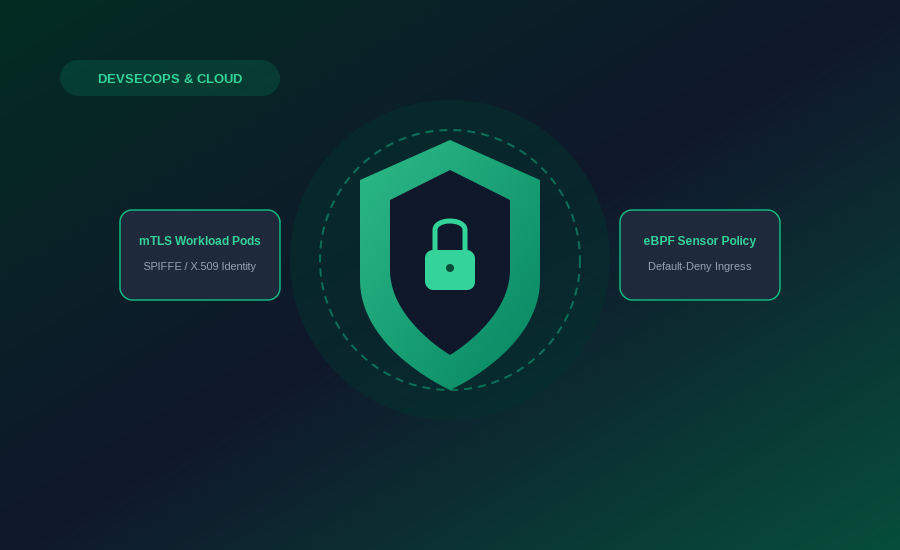
- Default-Deny Network Policies: Every pod operates under strict ingress and egress whitelists powered by Cilium eBPF filters.
- Automatic SPIFFE/SPIRE Identity Attestation: Short-lived X.509 cryptographic identities issued to workloads dynamically, rendering static API tokens obsolete.
- Read-Only Root Filesystems: Immutable containers prevent malicious processes from compiling payloads in runtime tmp directories.
2. Multi-Tenant Data Isolation
For enterprise B2B SaaS platforms, data leaks between corporate accounts represent existential risk. We architect tenant-level data isolation using partitioned schemas, dynamic row-level security (RLS) policies, and customer-managed encryption keys (CMEK) backed by AWS KMS or HashiCorp Vault.
3. Continuous Automated Auditing
Automated policy-as-code engines (OPA Gatekeeper and Kyverno) evaluate Kubernetes admission webhooks in real time, automatically blocking misconfigured images or containers requesting root privileges.